Back to Services
We provide thermal analysis as a measurement service in our own laboratory.
Our offering covers Differential Scanning Calorimetry (DSC),
Thermogravimetric Analysis (TGA) and
Thermomechanical Analysis (TMA) of polymeric, organic and inorganic materials.
From sample receipt to the final test report, we follow recognised standards and
document every step in full.
Good Laboratory Practice (GLP)
All measurements are carried out in accordance with the principles of
Good Laboratory Practice (GLP). GLP ensures reproducible,
traceable and quality-assured results — particularly important in regulated
applications and product development. GLP-compliant working practice is
underpinned by the long-standing scientific and industrial qualifications
of Dipl.-Phys. Werner Winter.
GLP Core Principles in Our Practice
- Regular instrument calibration using certified reference standards with calibration record
- Documented sample preparation: sample ID, mass, sample description
- Written method description (SOP) with defined measurement parameters
- Four-eyes principle for evaluation and plausibility checking, carried out by an experienced freelance specialist in the field of thermal analysis
- Archiving of all raw data, records and reports in accordance with GLP requirements
Applicable Standards
Depending on the measurement task, we follow the relevant international standards
from the DIN EN ISO and ASTM series:
DSC – Differential Scanning Calorimetry
- DIN EN ISO 11357-1 General principles of DSC
- DIN EN ISO 11357-2 Glass transition temperature (Tg)
- DIN EN ISO 11357-3 Melting and crystallisation temperature and enthalpy
- DIN EN ISO 11357-4 Specific heat capacity (cp)
- DIN EN ISO 11357-6 Oxidation induction time and temperature (OIT)
- ASTM E967 Temperature calibration of DSC
- ASTM E968 Heat flow calibration of DSC
- ASTM E1269 Determination of specific heat capacity
- ASTM E2253 Modulated DSC (MDSC) – temperature calibration
TGA – Thermogravimetric Analysis
- DIN EN ISO 11358-1 Thermogravimetry of polymers – general principles
- DIN EN ISO 11358-2 Determination of activation energy
- ASTM E1131 Thermogravimetric analysis (TGA) of polymers
- ASTM E1582 Temperature calibration of TGA
TMA – Thermomechanical Analysis
- DIN EN ISO 11359-1 General principles of TMA
- DIN EN ISO 11359-2 Linear thermal expansion coefficient (CTE)
- ASTM E831 Linear thermal expansion coefficient by TMA
- ASTM E1545 Glass transition temperature by TMA
Examples of Process Documents
For every measurement order we create and archive a complete set of documents.
Typical documents include:
Test Plan / Order Form
Sample ID, method, standard reference, client information
View example
Method Description (SOP)
Standard operating procedure with parameters, pans, atmosphere, heating rate
View example
Calibration Record
Reference standards, date, instrument, deviations and correction values
View example
Measurement Record
Date, operator, sample, mass, conditions, raw data reference
View example
Evaluation / Test Report
Results, curves, interpretation, standard reference, sign-off
View example
Pyris Measurement Report
Automatically generated by Pyris software, including method, calibration data and thermogram
View example
Measurement Procedure
-
Order Clarification and Sample Receipt
Definition of the measurement task, selection of method and standard, recording of sample information in the test plan.
-
Sample Preparation and Weighing
Conditioning, sub-sampling and weighing into appropriate pans; documentation of mass and sample designation.
-
Method Selection and Instrument Setup
Definition of temperature programme, heating rate, atmosphere and reference material in accordance with SOP and customer requirements. Preliminary measurements are carried out if required to optimise measurement parameters.
-
Measurement Execution
Measurement according to validated method; monitoring of the measurement progress; automatic storage of raw data.
-
Evaluation and Plausibility Check
Evaluation of measurement signals, determination of characteristic values, comparison with expected values and standard requirements.
-
Test Report Compilation and Delivery
Compilation of all results, curves and interpretations in the test report; archiving and delivery to the client.
Practical Information
Turnaround Times
The typical processing time is approx. 2 weeks from receipt of the sample at our laboratory.
For complex measurement tasks or periods of high sample volume, deviations may occur –
we will inform you in advance in such cases.
Sample Quantities
For homogeneous substances, typically just 200–500 mg of sample material.
DSC and TGA measurements are in principle possible with just a few milligrams — if only small quantities are available, please contact us in advance.
For inhomogeneous materials or layer systems, the required quantity will be agreed individually.
Shipping Instructions
Packaging of the sample is the sender's responsibility and must be appropriate
for the sample properties (e.g. solid, powder, liquid, hazardous material).
If you have questions regarding suitable packaging or labelling, please contact us beforehand.
Confidentiality
All samples, measurement data and results entrusted to us are treated as strictly confidential.
No information will be disclosed to third parties. The confidentiality policy is part of our
General Terms and Conditions.
For questions about sample submission or placing an order, please use our
contact form.
Pricing
The price per measurement order depends on the method used, the temperature
range and the analytical effort involved.
Measurement Order
€150 – €210
excl. VAT
Depending on method (DSC / TGA / TMA), temperature range and analytical
effort. Volume and series orders on request.
Test Report
Included
in the order price
GLP-compliant test report per DIN / ASTM with measurement uncertainty,
curves and interpretation is included in the order price.
For an individual quote or questions about volume pricing, please
contact us.
Instruments Used in Our Own Analysis Laboratory
Quality through high-precision technology. We rely on first-class instruments from
 PerkinElmer® is a registered trademark of PerkinElmer, Inc.
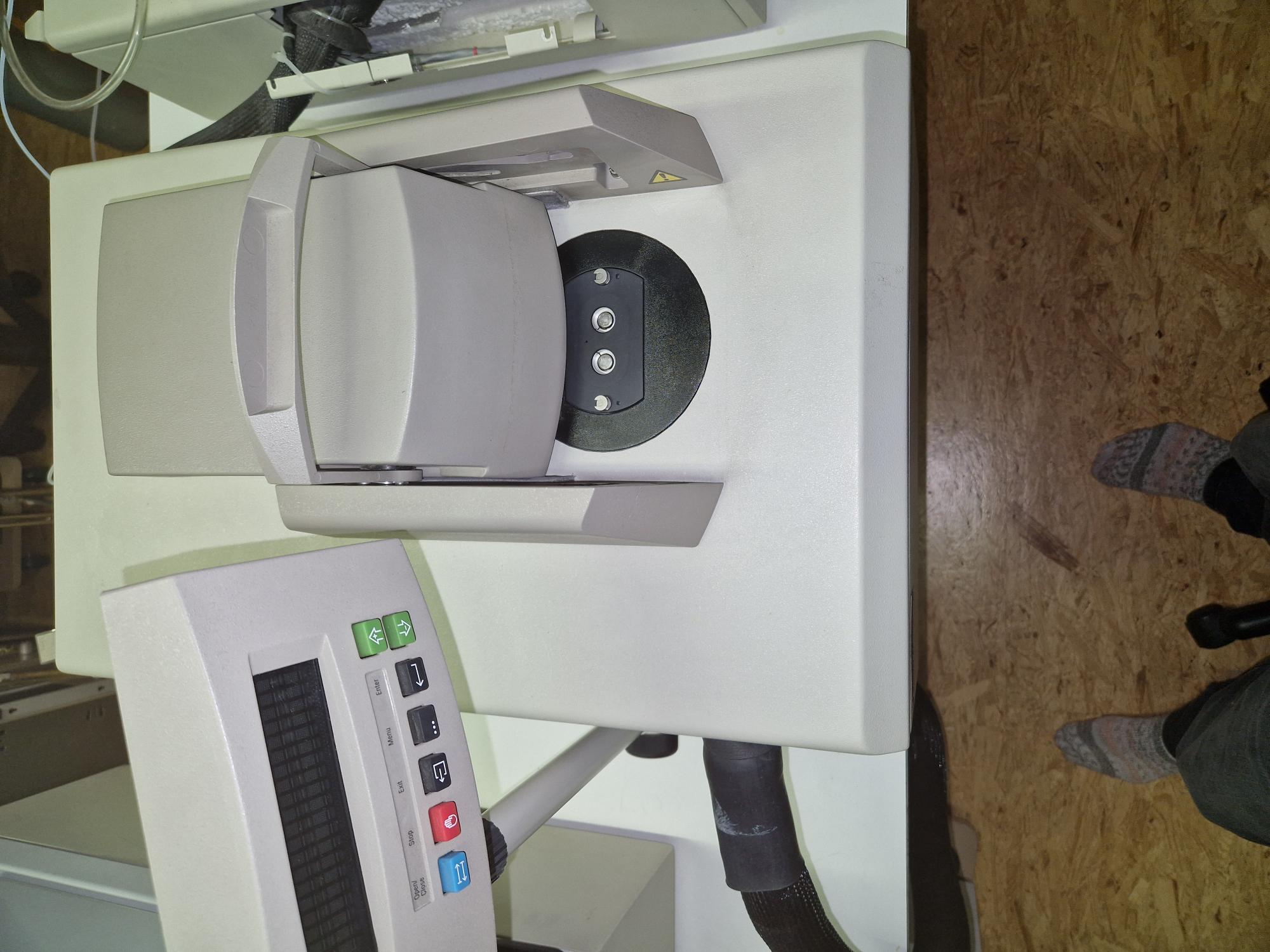
Pyris 1 DSC
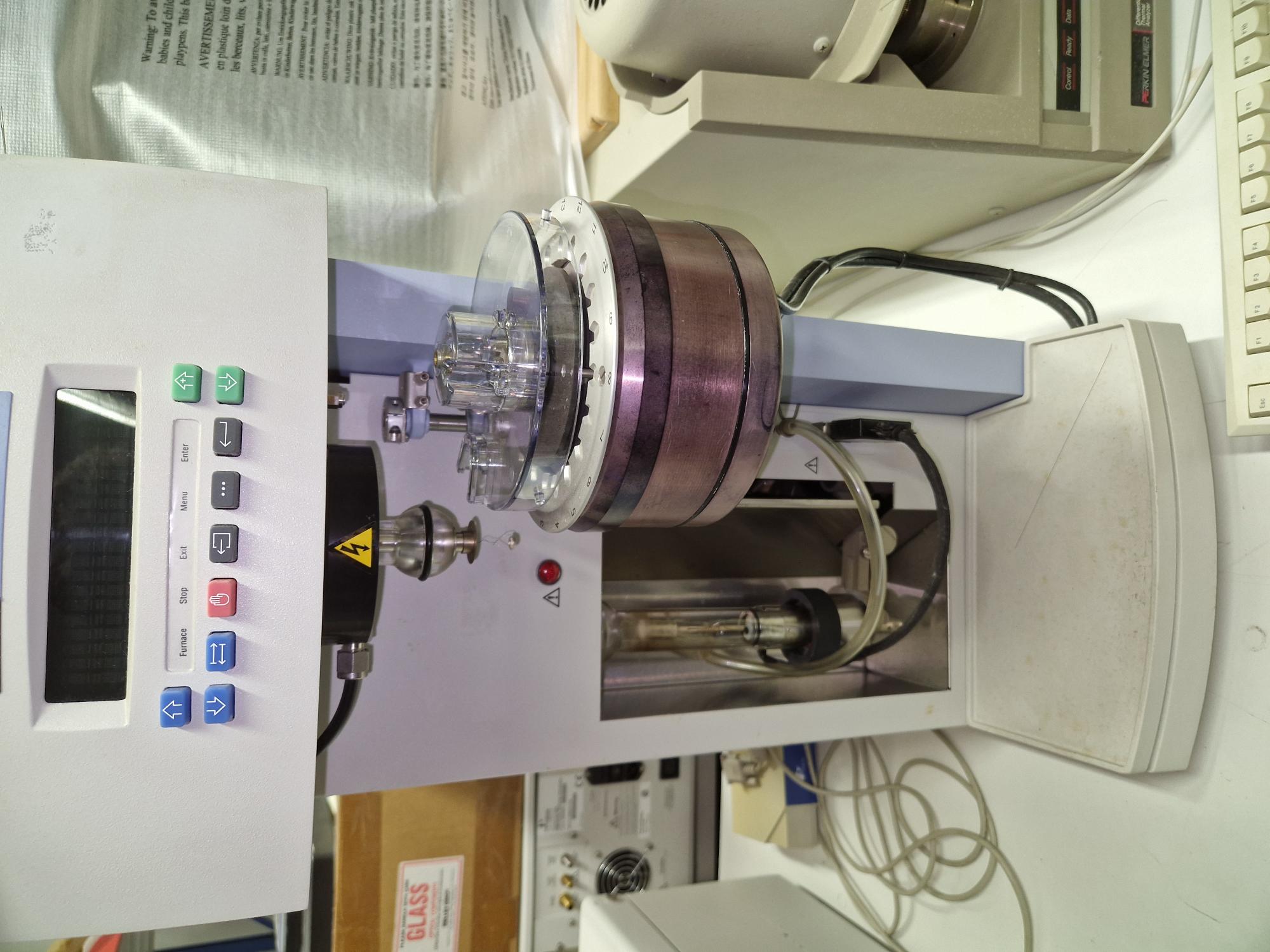
Pyris 1 TGA
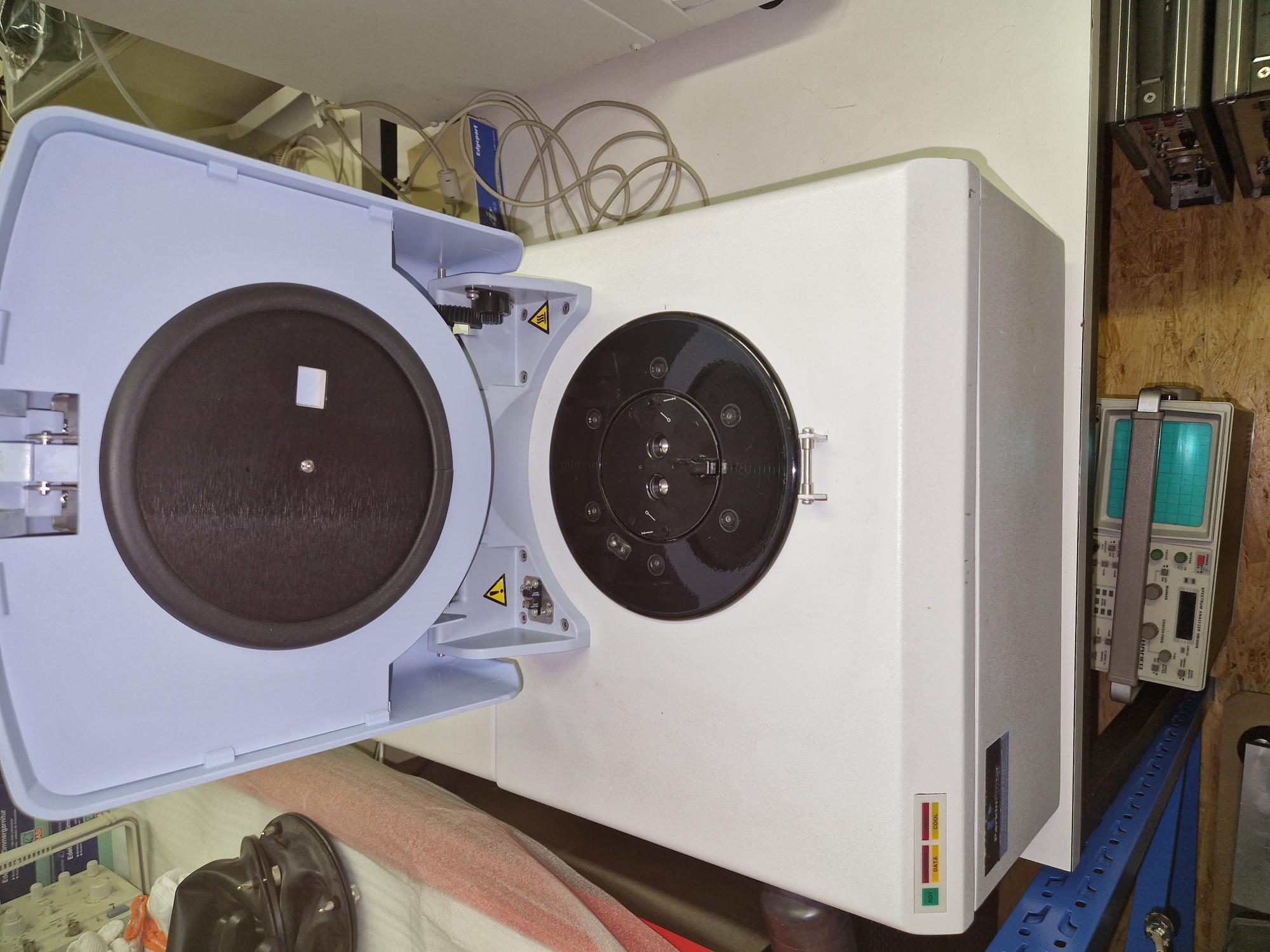
Diamond DSC
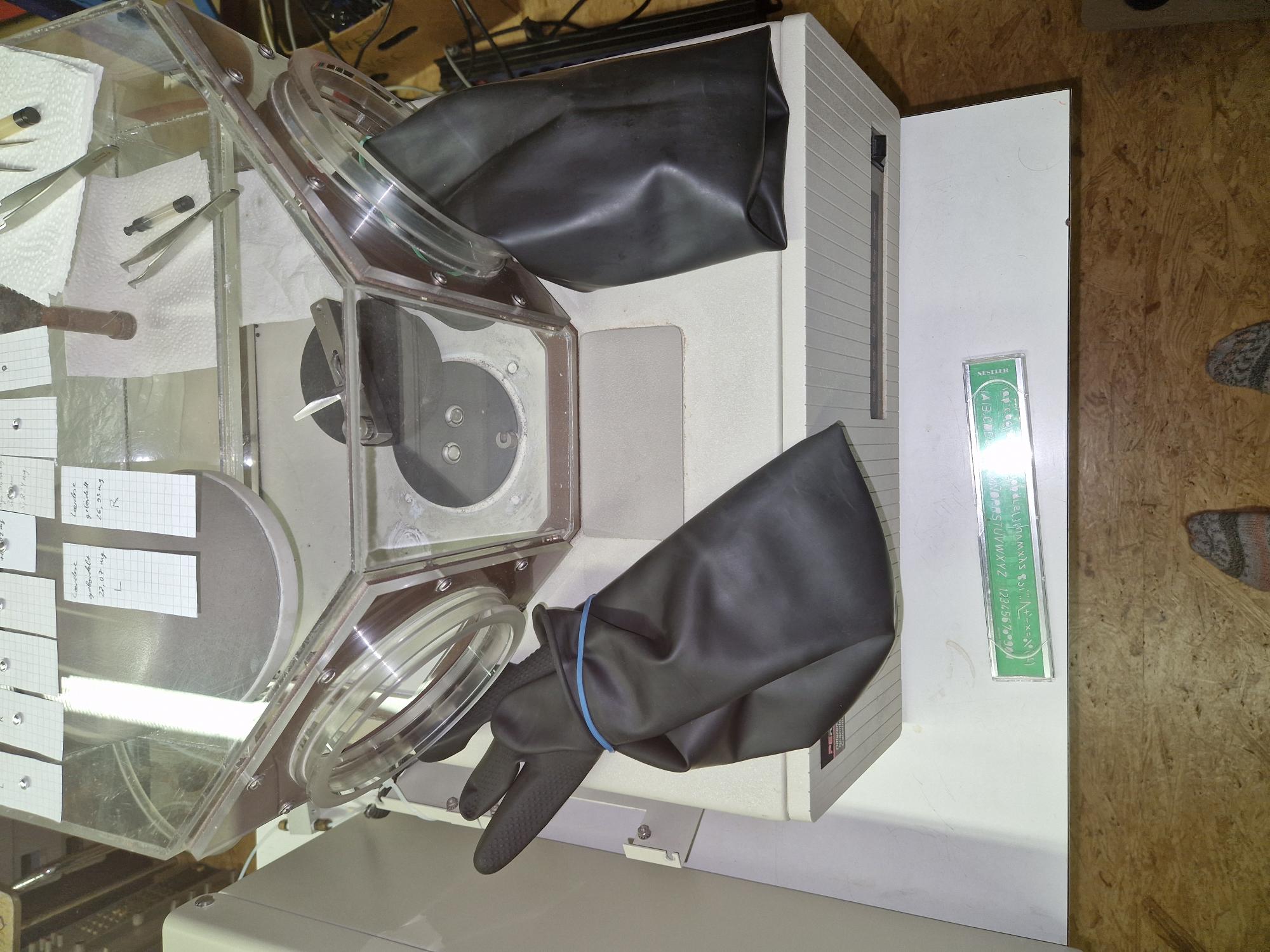
DSC-7
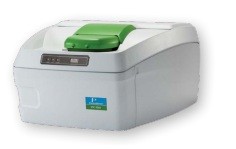
DSC 8000
DSC 4000
Diamond TMA
TMA-7
TGA-7
Diamond TG/DTA
Application Examples
Thermal analysis and calorimetry have proven to be successful methods across numerous fields.
Materials Characterisation
Determination of characteristic temperatures and enthalpies as well as specific heat capacity cp by the three-step method with a sapphire reference standard (DIN EN ISO 11357-4 / ASTM E1269).
Quality Control
Of plastic products: investigation of the causes of customer complaints and material defects.
Degree of Cross-linking
Thermoset plastics: determination of the curing level of epoxy resins and coatings.
Stability (OIT)
Determination of oxidation induction time (OIT) to assess the oxidative stability of polymers and fats (a purely oxidative parameter, not a thermal stability quantity).
Glass Transition Temperature
Determination to define the operating temperature range of materials.
Food Characterisation
Melting and crystallisation behaviour of fats and oils, starch gelatinisation, protein denaturation and thermal phase transitions.
Filler & Ash Content (TGA)
Quantitative determination of filler, carbon black and ash content in polymers and composites by controlled combustion and pyrolysis.
Moisture & Solvent Content (TGA)
Gravimetric determination of residual moisture, water of crystallisation and solvent residues in pharmaceutical substances, polymer powders and inorganic salts.
Thermal Stability & Decomposition Kinetics (TGA)
Determination of decomposition temperatures and activation energies; comparison of formulation variants with respect to long-term stability and thermal resistance.
